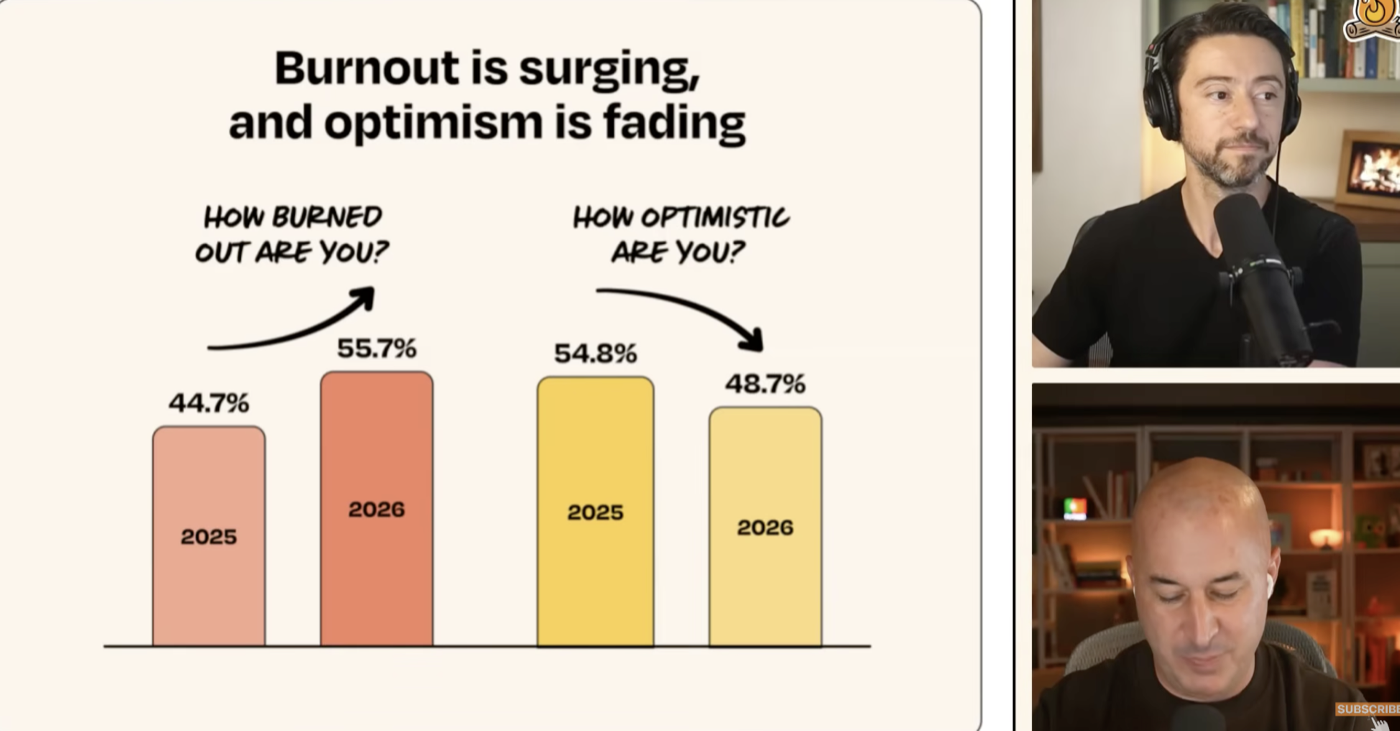
Since 2025, Noam Segal, a former Big Tech researcher, has been running a survey with Lenny's Newsletter: the Tech Worker Sentiment Survey. It digs into how people in tech feel about their careers and their lives. Around 8,000 people took the first one, and around 6,000 took this one. Most respondents subscribe to an English-language newsletter, so you can't generalize too much. Still, it's an influential community and the biggest survey of its kind, and there was a lot of good stuff in it.
Last year's takeaway was 'Burned out, but optimistic.' This year's is 'A workforce splitting in two'. Here's what stood out to me.

Productivity went up, and so did the work.
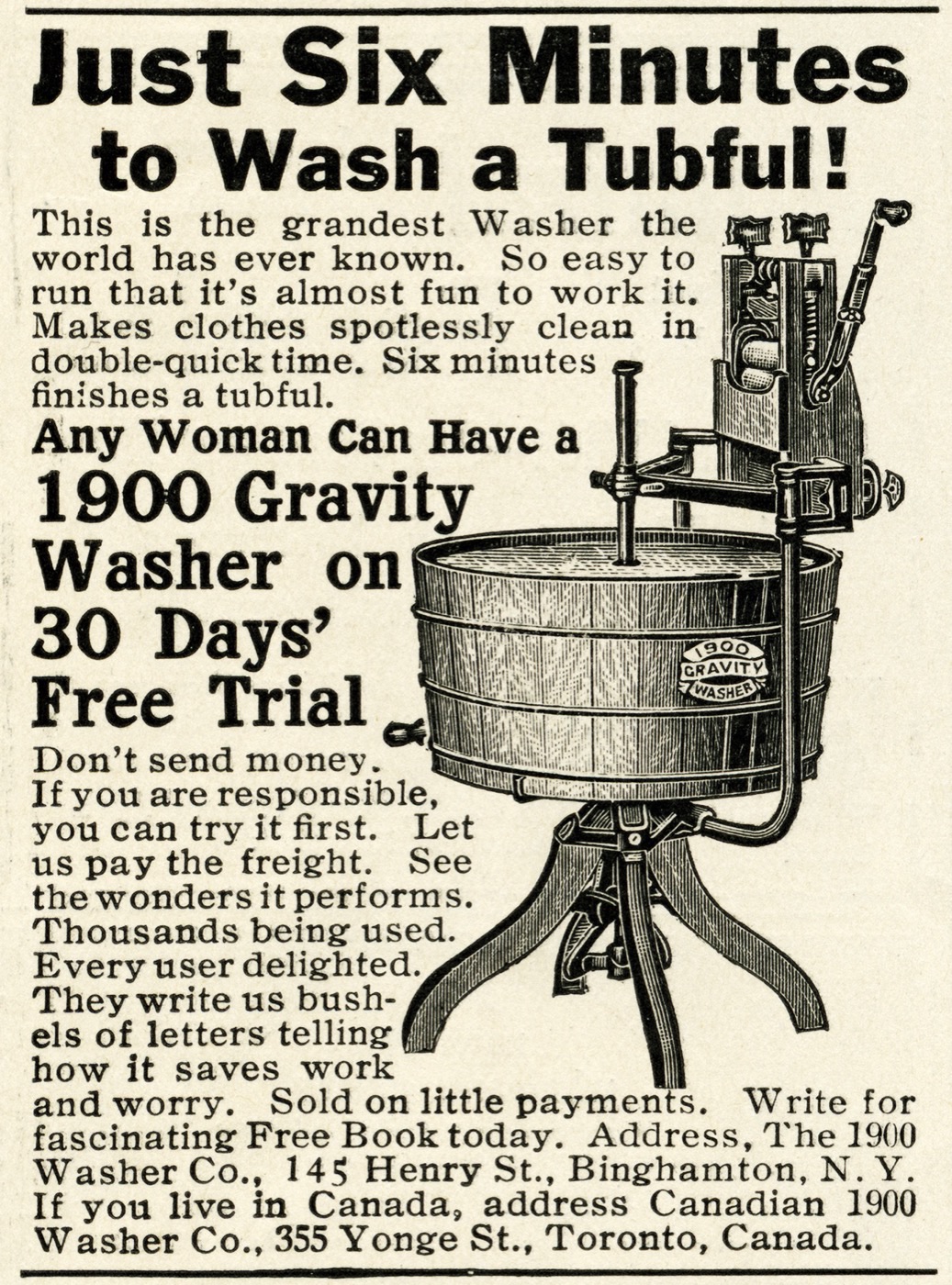
I used to think better tech would buy us more free time, and we'd get to spend it on ourselves. The Technology Paradox says otherwise. The washing machine didn't cut down on housework. Tech went the same way. The bar for speed and competition moved, and now there's just more work. The survey says burnout is up because of more prototypes, more docs, more campaigns, more agents. The complaint isn't about whether the work matters. It's about how much of it there is.
.
A workforce splitting in two
According to the survey, the industry has split in two: people who are down and angry, and people who've found their energy again. The AI Blue side, I get. I see it all around me. But who are the people having fun? They're the ones who broke free from job titles, fixed identities, and the limits of their skill set. They go by a lot of names: Full-stack, Generalist, Maker, Builder. They tend to take in a lot, have plenty of energy and curiosity, and think like founders.
.
The ones who stayed calm
PMs and salespeople reported high job satisfaction and optimism. Some people predicted sales jobs would be the first to vanish or get replaced. But after working on B2B and hardware products, I'm convinced a salesperson's network and know-how are a real moat in the AI era. The takeaway: the more generalist the role, the less shaken people were.
.
Watching from the sidelines
Outside of tech, things have shifted much less. My guess is there haven't been mass layoffs there yet, so it doesn't feel real. Once Physical AI and Robotics start changing everyday life, the problems tech ran into first will probably spread to everyone else. Gradual or sudden, I can't say. But it seems pretty clear it'll happen within a few years.
.
The happy ones
Survivorship bias aside, founders and people at small companies were mostly happy. Now that AI lets a small team punch above its weight, the people who get a direct say in decisions and set their own direction feel good about where things are.
.
The unhappy ones
Researchers and designers had it worst across the board. Researchers and data analysts were anxious about being replaced. Designers scored highest on Burnout varies by role. Design calls are subjective, and the traditional way most companies collaborate limits how much designers can use AI. It's an odd spot: stuck in a blind spot, without the AI boost other Tech roles get. But one comment stood out: taste, judgment, and attention to detail might be the most valuable skills right now. If that's true, designers' Vertical Skill in visual language could really shine.
In 2024, most people's worry was 'Losing job to AI'. In 2026, the real problem is 'Unsustainable work balance'. These people are on the front lines of tech, so burnout right now hits harder than some vague future threat. And unlike the Covid era, nobody in Tech would recommend their own job.
.
The manager effect, and company size
But more than anything above, having a good manager had the biggest impact on job satisfaction, optimism, and burnout. That held for everyone, regardless of company, company size, industry, pay, or role. Where you work doesn't matter. Who you work with is everything.
And the bigger the company, the worse burnout and satisfaction got. There was no sweet spot. It just kept getting worse with size. I think it comes down to control. People are happy when they get to steer their own career. They're miserable when someone else decides how their day goes. Then again, some people are fine being kept like livestock.
- Don't overwork or get too sucked in. Make time for walks.
- Find good managers and allies, and keep those relationships going.
- Consider a small pay cut for a smaller company, or start your own.
- Become a Maker. It solves a lot.